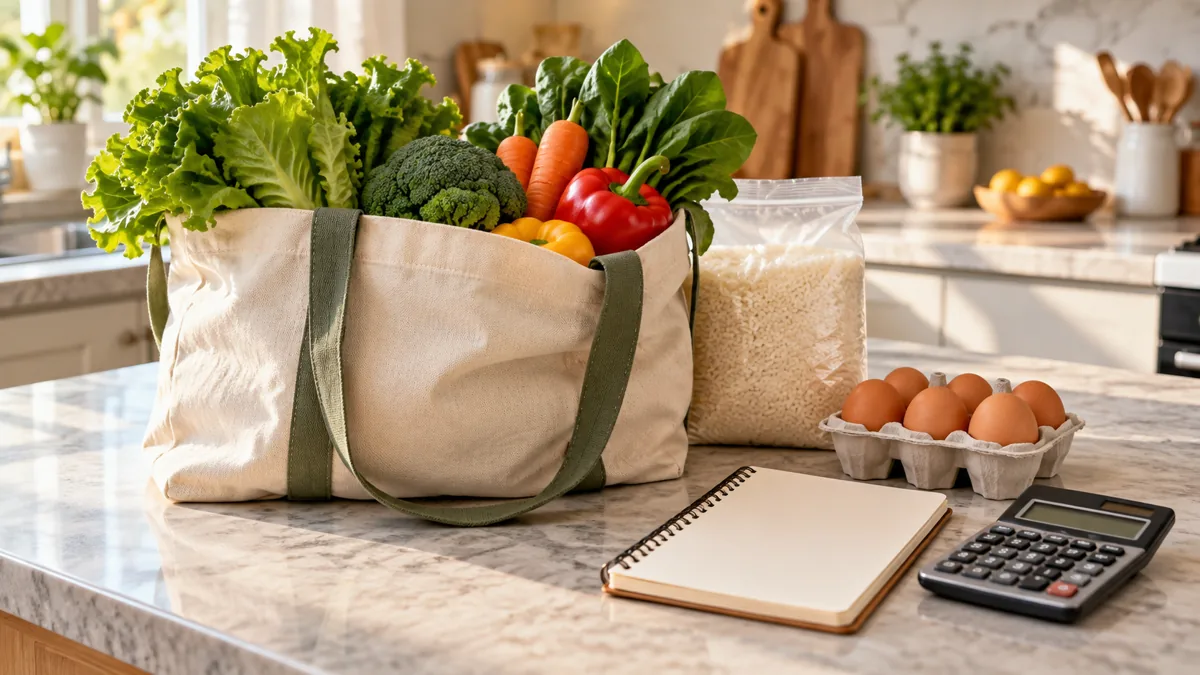
Start with your next shop: Check what is already at home, plan meals around it, write a list, and compare unit prices for the items you need. Use the actual receipt to see whether your changes lowered spending. Bulk packs and promotions help only when the food will be used.
1. Check Your Kitchen Before You Shop
Before you make a grocery list, take five minutes to look through your refrigerator, freezer, and pantry.
You might already have half the ingredients for dinner.
Maybe there’s pasta in the cabinet, frozen chicken in the freezer, and a jar of sauce hiding behind the cereal.
That’s one less meal you need to buy from scratch.
The USDA recommends checking what you already have before planning meals and shopping. It’s a simple way to avoid buying duplicates and wasting food.
Try this: Pick two meals each week that use ingredients you already own.
2. Plan Meals Around Your Actual Schedule
Meal planning sounds great until Wednesday arrives, you’re exhausted, and the complicated recipe you picked on Sunday suddenly seems impossible.
That’s why your meal plan should match your life.
If you work long hours, plan easy dinners for busy nights. Save recipes that take more time for your days off.
A realistic weekly plan might look like this:
| Day | Dinner |
|---|---|
| Monday | Chicken, rice, and vegetables |
| Tuesday | Tacos |
| Wednesday | Leftover taco bowls |
| Thursday | Pasta with salad |
| Friday | Homemade pizza |
| Saturday | Flexible night |
| Sunday | Soup and sandwiches |
Notice that some ingredients can be used more than once.
That means fewer separate purchases and less food sitting unused in the refrigerator.
You also don’t need to plan every single meal. Leaving one flexible night can help you use leftovers or adjust when plans change.
3. Make a Grocery List—and Actually Use It
A grocery list isn’t just about remembering what you need.
It gives you a plan before you’re surrounded by tempting snacks, displays, and sale signs.
Organize your list into categories such as:
- Produce
- Meat and other proteins
- Dairy and eggs
- Pantry items
- Frozen foods
- Household essentials
Keep a running list on your phone so you can add things when they run out.
And don’t worry if you occasionally buy something that wasn’t on the list. The goal is to reduce unnecessary purchases, not turn grocery shopping into a strict set of rules.
4. Compare Unit Prices, Not Just Package Prices
A bigger package isn’t always the better deal.
Let’s say you’re choosing between two bags of rice:
- Bag A: 2 pounds for $4.00
- Bag B: 5 pounds for $8.50
Bag A costs $2.00 per pound.
Bag B costs $1.70 per pound.
If you regularly eat rice and have room to store it, Bag B offers better value.
But there’s a catch: a lower unit price only saves you money if you actually use what you buy.
Buying a huge container of something that expires before you finish it isn’t much of a bargain.
Look for the unit price on shelf labels, and compare similar products by ounce, pound, or another consistent measurement.
5. Give Store Brands a Chance
You don’t have to stop buying every brand you like.
But some everyday products are worth comparing with store-brand alternatives.
Think about items such as:
- Oatmeal
- Rice
- Pasta
- Canned beans
- Frozen vegetables
- Flour
- Basic cleaning supplies
Try swapping one or two products at a time.
If you like the less expensive version, keep buying it. If you genuinely prefer the original, that’s fine too.
Saving money works better when you make changes you can stick with.
6. Buy Frozen and Canned Foods When They Make Sense
Fresh produce is great, but it isn’t your only option.
Frozen vegetables can be convenient because you can use what you need and keep the rest for another meal.
Canned beans, tomatoes, and other pantry staples can also make inexpensive meals easier to prepare.
The USDA recommends using a mix of fresh, frozen, and shelf-stable foods when planning meals on a budget.
For canned products, compare nutrition labels and consider lower-sodium or no-added-salt options when appropriate.
The goal isn’t to choose frozen over fresh every time. It’s to buy food that fits your meals, budget, and schedule.
7. Shop Sales With a Plan
A sale isn’t automatically a good deal.
If you buy three bags of chips because they’re discounted, but you only needed one, you may have spent more—not less.
Before buying a sale item, ask yourself:
Would I still buy this if it weren’t on sale?
If the answer is no, you might be better off leaving it on the shelf.
Sales are most useful for items you already purchase regularly, especially products that store well.
You can also check grocery store apps and loyalty programs for discounts. Just remember that a coupon doesn’t help if it encourages you to buy something you wouldn’t otherwise need.
8. Stop Throwing Away Food You Paid For
One of the easiest ways to lose money on groceries is to let food go bad before you eat it.
Think about the bag of spinach you forgot, the leftovers pushed to the back of the fridge, or the fruit you bought with good intentions.
A few habits can help:
- Keep older food toward the front of the refrigerator.
- Plan a meal around ingredients that need to be used soon.
- Freeze suitable leftovers before they spoil.
- Buy smaller quantities of perishable foods when necessary.
- Check storage guidance instead of guessing how long food will last.
The FDA recommends keeping refrigerators at 40°F or below and freezers at 0°F for food safety.
For specific storage questions, the USDA’s FoodKeeper resource can help you understand how to store different foods safely.
9. Keep a Few Easy Meals at Home
Sometimes the biggest grocery-budget problem isn’t the grocery store.
It’s getting home late, realizing there’s nothing easy to make, and ordering takeout because cooking feels like too much work.
Keeping ingredients for a few simple meals can help.
For example:
Quick pasta: Pasta, jarred sauce, and frozen vegetables.
Easy breakfast dinner: Eggs, toast, and fruit.
Rice bowls: Rice, beans or chicken, and whatever vegetables you have.
Simple quesadillas: Tortillas, cheese, and beans.
These aren’t fancy meals, and that’s the point.
Having something convenient available can make it easier to stick to your food budget when you are tired or short on time.
10. Track the Cost of a Small Grocery Basket
Choose five to ten staples you buy regularly and record their package size, price, and unit price. Compare the same products across two convenient stores over several trips. Include transportation or delivery costs before deciding that a lower shelf price is a saving.
For a hypothetical example, 2 pounds of rice at $4 costs $2 per pound, while 5 pounds at $8.50 costs $1.70 per pound. Buying 5 pounds at the smaller package’s unit price would cost $10, so the larger bag saves $1.50 if you use all of it. These are illustrative prices, not a national average.
Keep household supplies separate from food when reviewing receipts. That makes your next grocery target easier to compare with actual food spending. If your basket remains unaffordable, extend your savings timeline rather than cutting necessary meals.
Turn the Tips Into a Weekly Routine
Before shopping, check your kitchen and plan a few meals. At the store, compare unit prices for your regular staples. After shopping, record the total and use perishable food safely. Review one change at a time so you can tell which habit actually reduces spending.
Put the result into your monthly budget. For a time-limited goal, use the 13-week savings plan and count only money you actually set aside.
Frequently Asked Questions
Is buying in bulk always cheaper?
No. Compare unit prices, storage space, and how much you will use. A smaller package can cost less overall if the larger one would spoil or strain the money available for essentials.
How much should I budget for groceries?
Start with recent food receipts and adjust for your household, dietary needs, location, and current prices. The hypothetical prices in this guide are calculation examples, not a recommended national budget.
Can frozen or canned foods fit a budget meal plan?
Yes. USDA meal-planning guidance includes fresh, frozen, and shelf-stable foods. Compare prices and labels and choose products you will actually use.
Sources and Further Reading
USDA MyPlate — Make a Plan; FDA — Refrigerator Thermometers and Food Safety; FDA — Cut Food Waste and Maintain Food Safety.
Reviewed October 16, 2026. This article provides general educational information, not personalized financial or medical advice.
Leave a Reply